Congenital Heart Defect

Updated: Feb 23
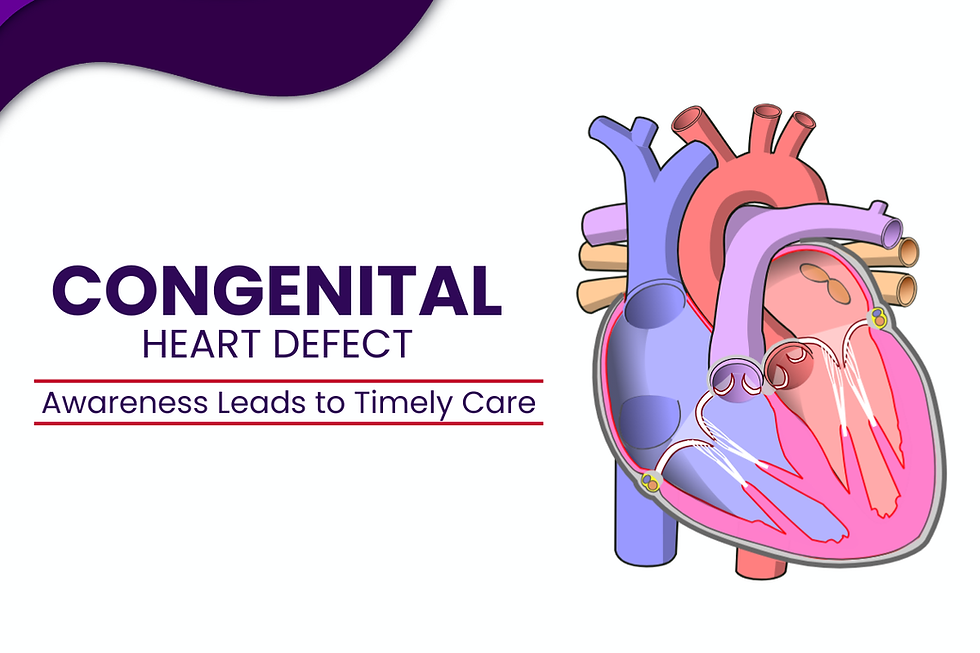
A congenital heart defect is a structural abnormality of the heart or major blood vessels that is present at birth. It develops during early pregnancy when the fetal heart is forming. Congenital heart defects affect how blood flows through the heart and to the rest of the body, influencing oxygen delivery and overall circulation. These conditions are a major part of congenital heart disease, a broad medical term used to describe all heart problems that exist from birth.
Congenital heart disease is one of the most common birth conditions worldwide. With advances in prenatal screening, pediatric cardiology, and surgical care, most children with a congenital heart defect now survive into adulthood and live productive lives. Clear understanding of causes, types, symptoms, and treatment is essential for early diagnosis and safe management.
Understanding Congenital Heart Defect
Congenital heart disease refers to a group of heart conditions present at birth, while a congenital heart defect describes the specific structural abnormality itself. These defects may involve the heart walls, heart valves, or major blood vessels. Some defects are simple and cause little or no symptoms, while others are complex and require early medical or surgical intervention.
During the first eight weeks of pregnancy, the fetal heart forms its chambers, valves, and vessels. Any disruption during this period can result in a congenital heart defect. Because heart development is complex, even small changes can affect normal blood flow patterns.
Types of Congenital Heart Defects
The types of congenital heart defects are classified based on how they affect blood flow and oxygen levels. Understanding these categories helps guide diagnosis and treatment.
Septal Defects
These involve openings in the heart walls that separate the chambers.
VSD is recognized as the most common congenital heart defect overall.
Obstructive Defects
These defects block or reduce blood flow due to narrowing of valves or vessels.
Aortic stenosis
Coarctation of the aorta
Cyanotic Congenital Heart Defects
These cause reduced oxygen levels in the blood.
Tetralogy of Fallot
Transposition of the great arteries
Tricuspid atresia
Complex Congenital Heart Defects
These involve multiple abnormalities.
Hypoplastic left heart syndrome
Double outlet right ventricle
Each congenital heart defect affects circulation differently, which determines symptoms and management.
Causes of Congenital Heart Defects in Newborns
The causes of congenital heart defects in newborns are often multifactorial. In many cases, no single cause is identified, but known risk factors include genetic and environmental influences.
Genetic Factors
Chromosomal conditions such as Down syndrome
Inherited gene variations
Maternal and Environmental Factors
Poorly controlled diabetes during pregnancy
Viral infections such as rubella in early pregnancy
Use of certain medications not safe for pregnancy
Alcohol consumption or smoking
Nutritional deficiencies, especially low folic acid intake
Proper prenatal care significantly reduces preventable risks related to congenital heart disease.
Syndromes Associated With Congenital Heart Defects
Several genetic syndromes are strongly linked with congenital heart disease. These are referred to as syndromes associated with congenital heart defects.
Down syndrome
Turner syndrome
DiGeorge syndrome
Noonan syndrome
These syndromes often involve heart defects along with other developmental features, requiring coordinated medical care.
Most Common Congenital Heart Defect in Down Syndrome
The most common congenital heart defect in Down syndrome is atrioventricular septal defect (AVSD). This condition affects the walls between heart chambers and the valves that control blood flow. Early diagnosis and timely treatment are essential to prevent complications such as heart failure or pulmonary hypertension.
Symptoms of Congenital Heart Defect
Symptoms of a congenital heart defect depend on the type and severity of the defect. Some mild defects may not cause noticeable symptoms in infancy, while severe defects present soon after birth.
Common symptoms include:
Rapid or difficult breathing
Bluish color of lips or skin
Poor feeding or slow weight gain
Excessive sweating during feeding
Fatigue or reduced activity
Frequent lung infections
Older children or adults with undiagnosed congenital heart disease may experience shortness of breath, irregular heartbeat, or reduced exercise tolerance.
Diagnosis of Congenital Heart Defect
Early diagnosis is critical for effective management of a congenital heart defect. Many defects are detected before birth or shortly after delivery.
Diagnostic methods include:
Prenatal fetal echocardiography
Newborn pulse oximetry screening
Echocardiogram
Electrocardiogram
Chest X-ray
Cardiac MRI or CT in selected cases
Accurate diagnosis helps determine the severity of congenital heart disease and the need for treatment.
Congenital Heart Defect Treatment
Congenital heart defect treatment depends on the specific defect, symptoms, and overall health of the child.
Observation
Small defects may close on their own or remain stable without intervention.
Medications
Used to manage heart failure symptoms, regulate heart rhythm, or reduce fluid buildup.
Catheter-Based Procedures
Minimally invasive techniques to close holes or widen narrowed vessels.
Surgical Repair
Open-heart surgery may be required to repair or reconstruct heart structures. Some complex congenital heart defects need staged surgeries over time.
Lifelong follow-up is essential for most patients with congenital heart disease.
Long-Term Outlook for Congenital Heart Disease
With modern care, many individuals born with a congenital heart defect live healthy, active lives. Ongoing monitoring ensures early detection of complications and supports smooth transition from pediatric to adult congenital heart care.
A congenital heart defect is a heart abnormality present at birth and a major component of congenital heart disease. Understanding the types of congenital heart defects, the most common congenital heart defect, causes, associated syndromes, and available congenital heart defect treatment options allows for early diagnosis and safe management. Evidence-based medical care and regular follow-up remain the foundation for long-term heart health.\


Comments